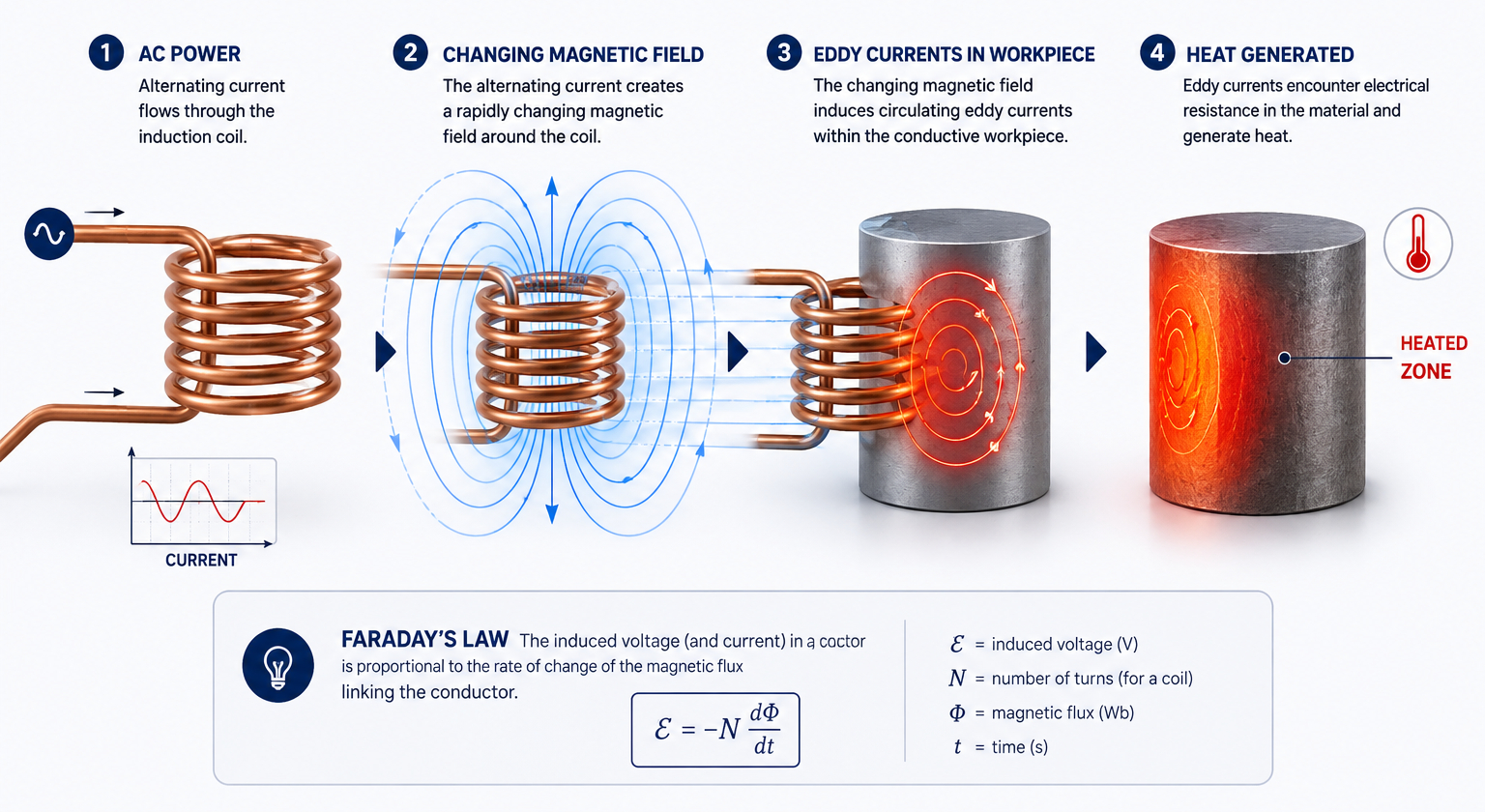


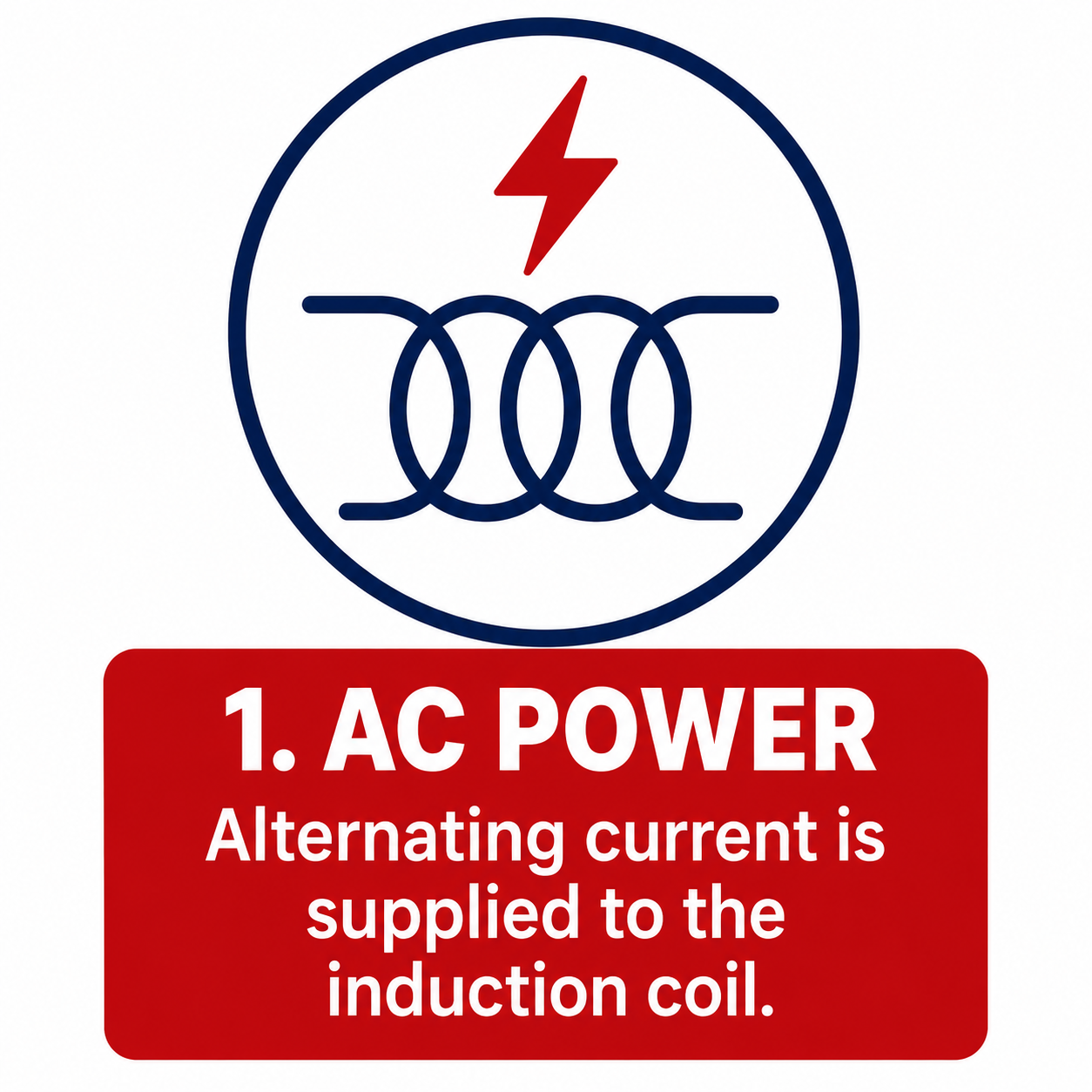




Alternating current flows through the induction coil.
Induction heating is based on electromagnetic induction and can be used to heat electrically conductive materials such as
METAL | CARBON | GRAPHITE
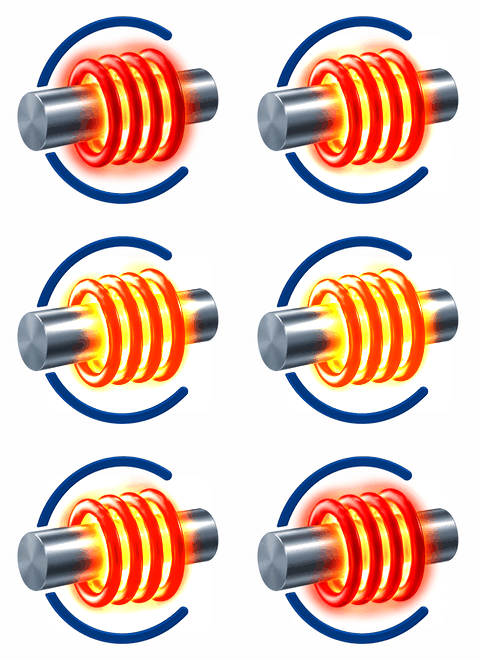
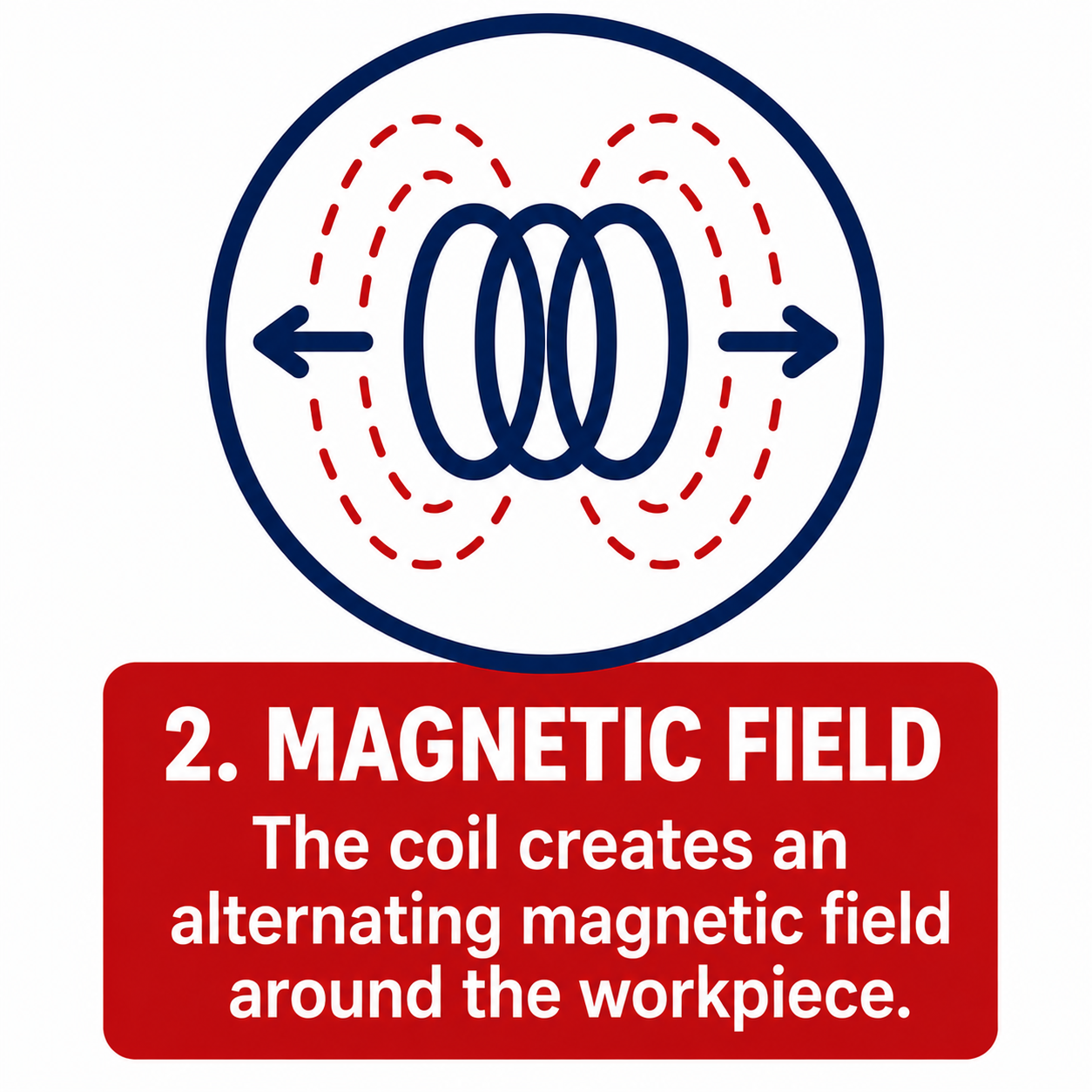
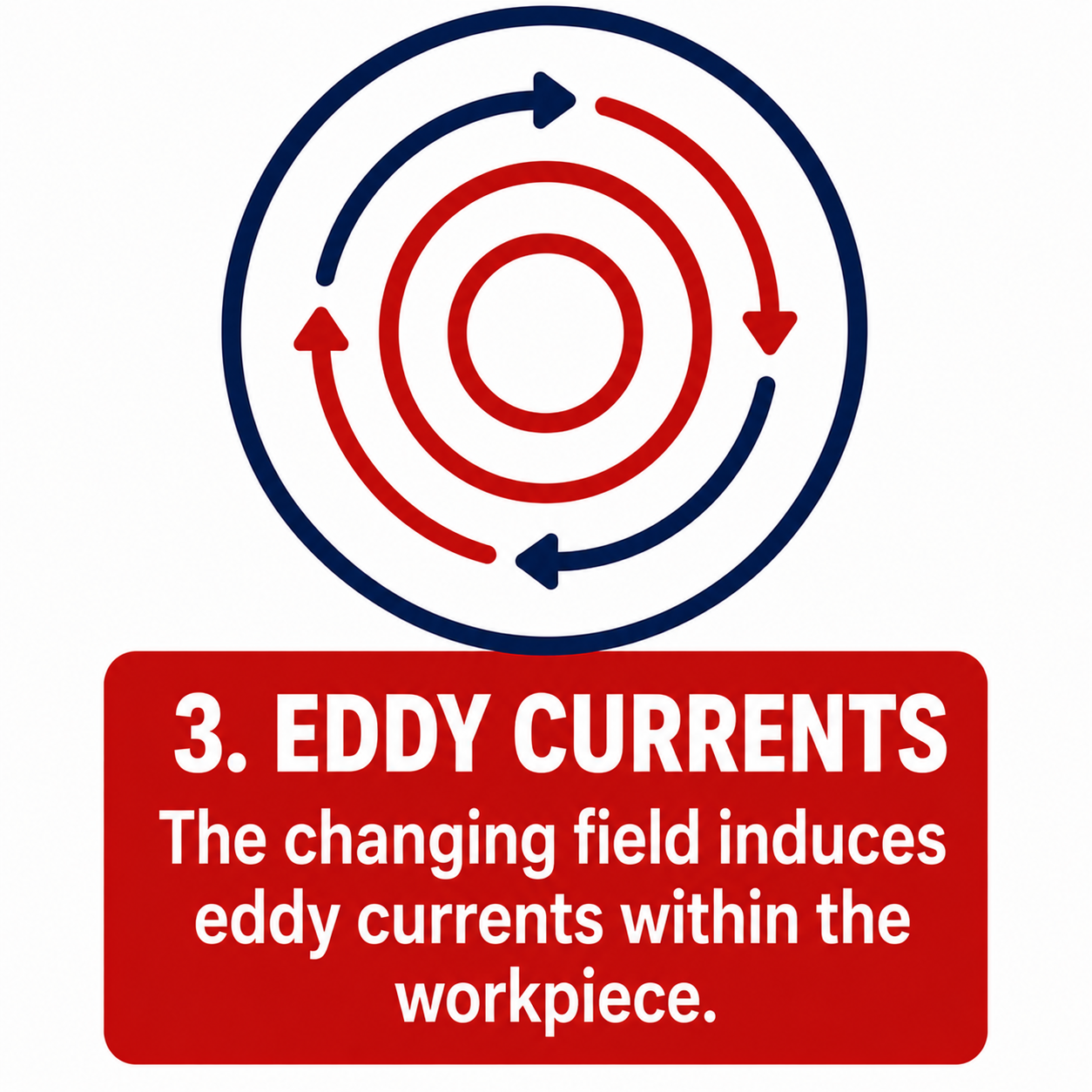
When alternating current flows through an induction coil, it creates a rapidly changing magnetic field around the coil. When a conductive workpiece is placed within this field, the changing magnetic field induces circulating electrical currents, called eddy currents, within the workpiece.
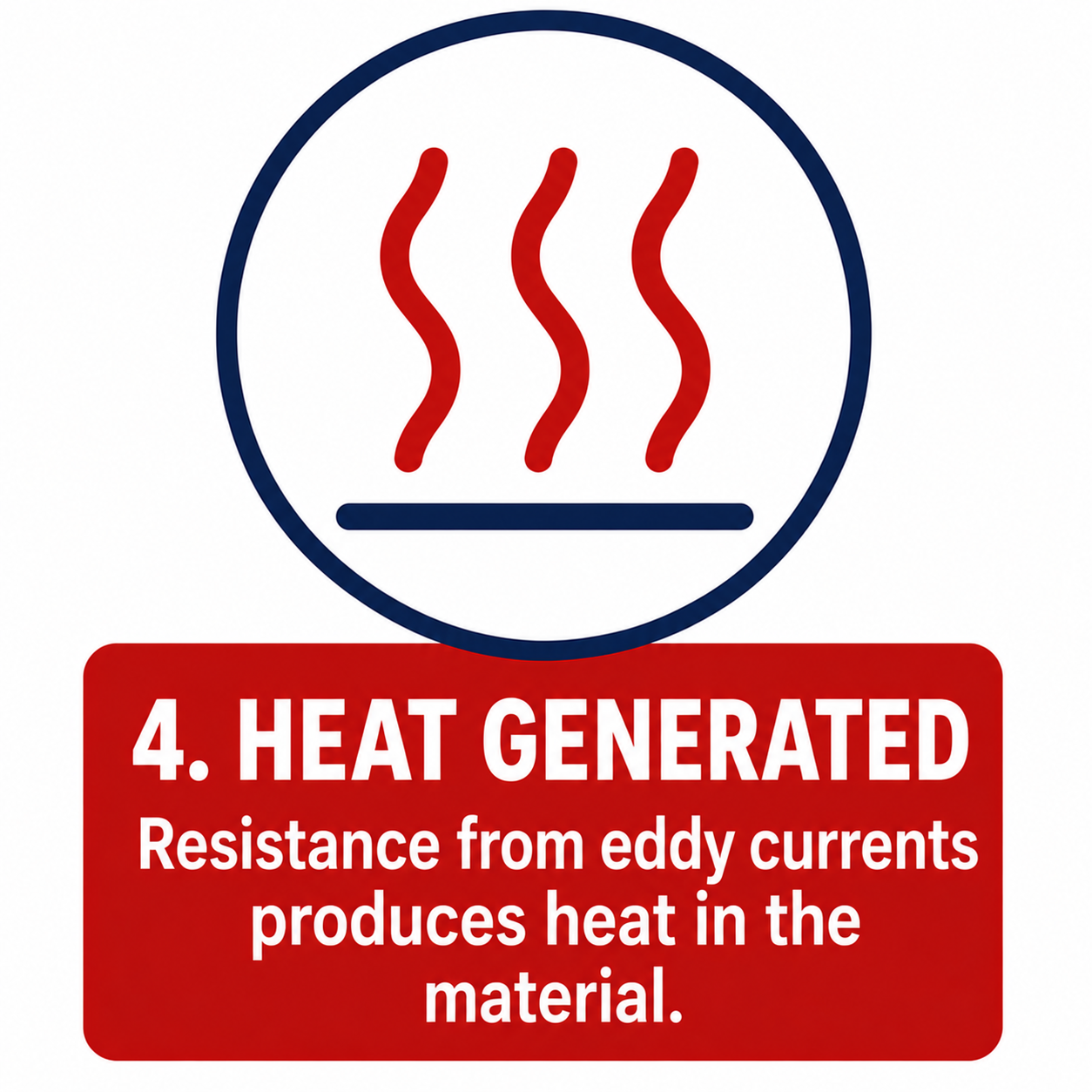
As the eddy currents flow through the material, electrical resistance generates heat directly within the workpiece—without the coil touching the part.
The amount and location of heat generated depend on several factors, including power, frequency, material properties, workpiece geometry, coil design and the coupling between the coil and workpiece.
For magnetic materials, hysteresis losses can also contribute to heating.
Contactless heating process that uses electromagnetic energy to heat conductive materials:

Heats in seconds

Heat exactly where it is needed

Energy is transferred directly into the workpiece

No open flame or combustion at the heat source

Consistent, controllable heating cycle after cycle
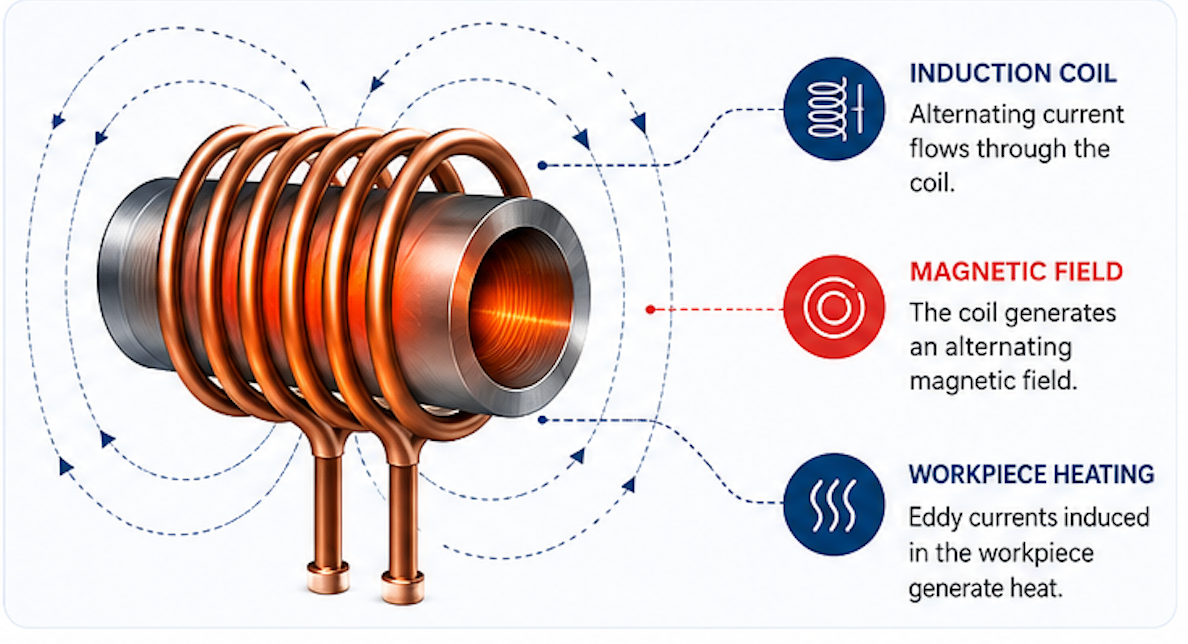
Discovered by Michael Faraday, Induction starts with a coil of conductive material
(for example, copper). As current flows through the coil, a magnetic field in and around the coil is produced. The ability of the magnetic field to do work depends on the coil design as well as the amount of current flowing through the coil.
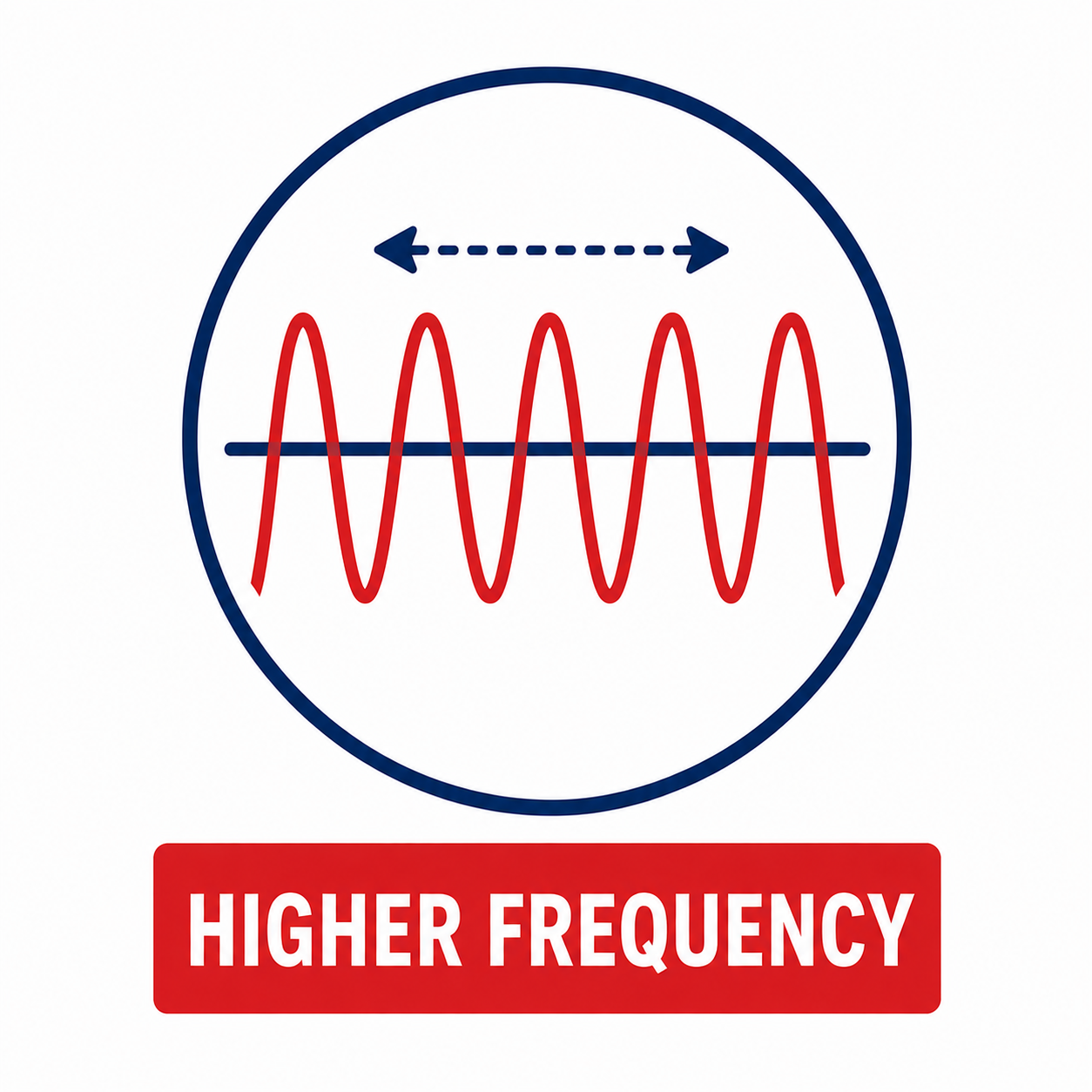
The direction of the magnetic field depends on the direction of current flow, so an alternating current through the coil will result in a magnetic field changing in direction at the same rate as the frequency of the alternating current. 60Hz AC current will cause the magnetic field to switch directions 60 times a second. 400kHz AC current will cause the magnetic field to switch 400,000 times a second.

Influences heating depth and where energy is concentrated.
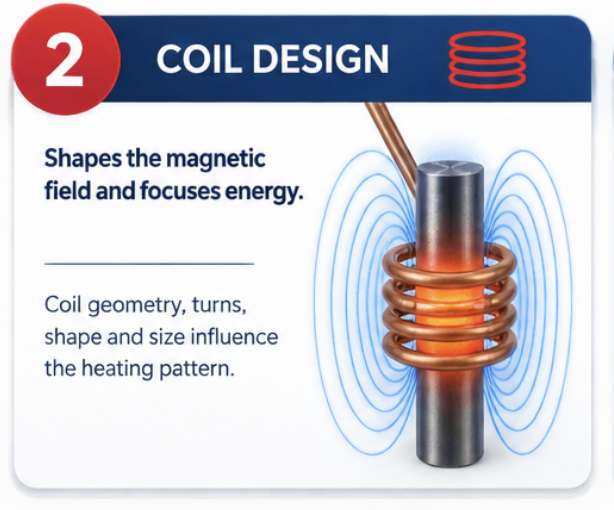
Influences where the electromagnetic field and heating are concentrated.
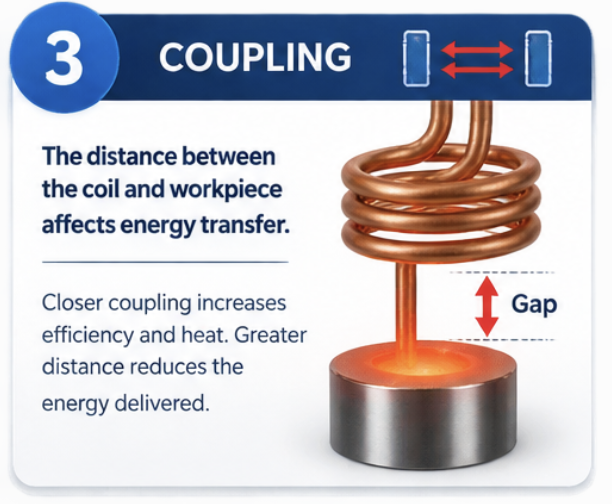
The relationship/distance between the induction coil and workpiece affects energy transfer.
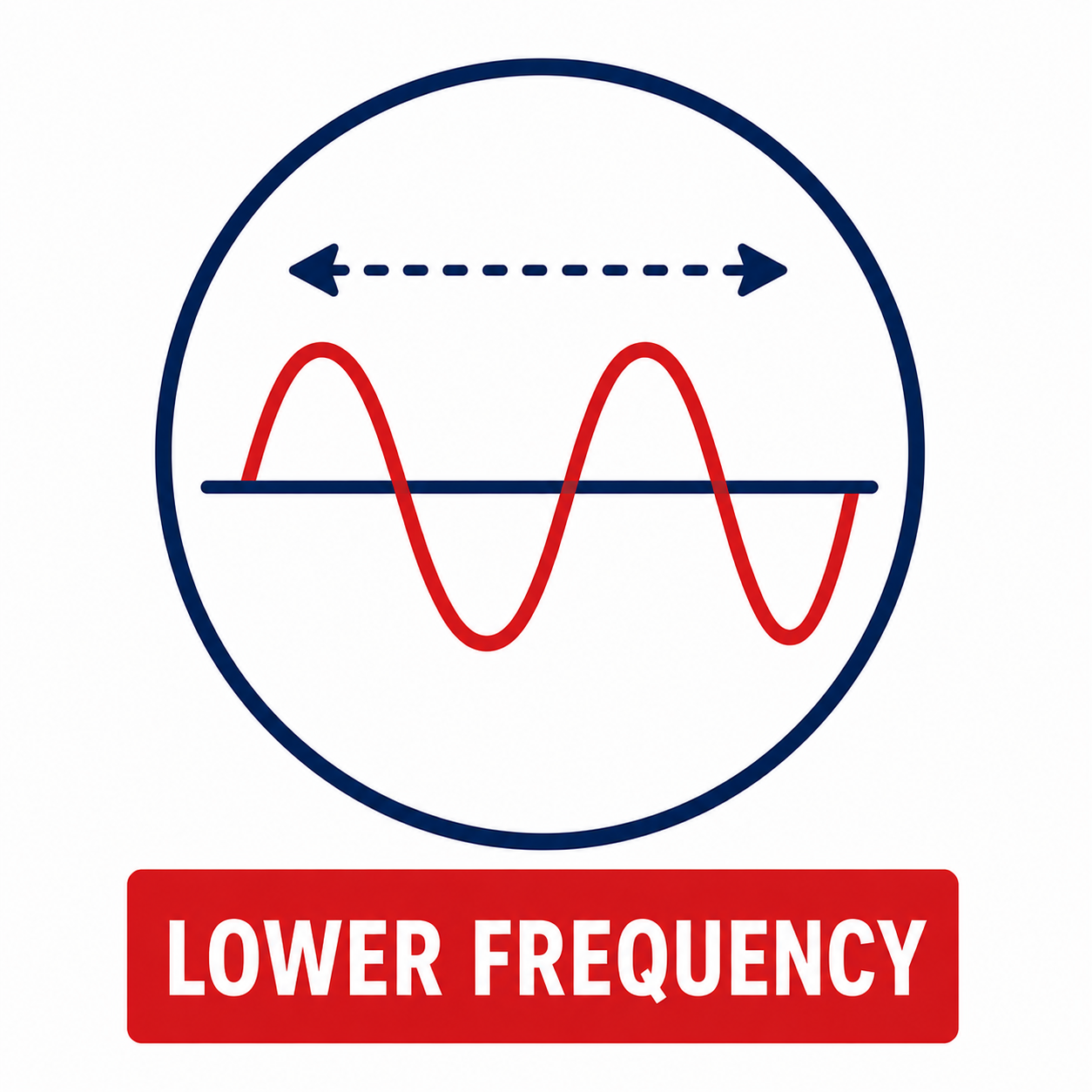
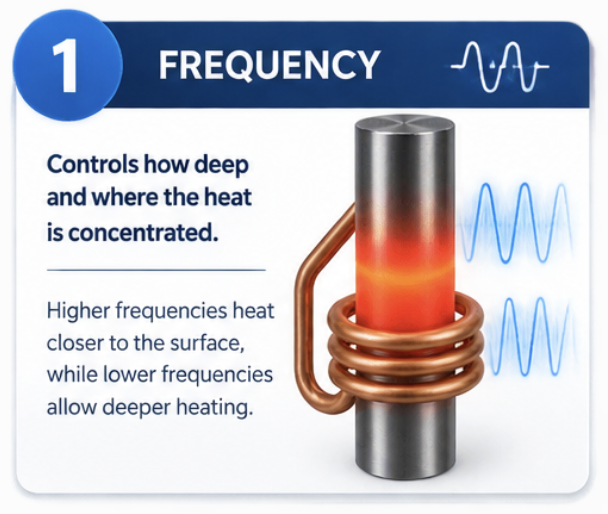
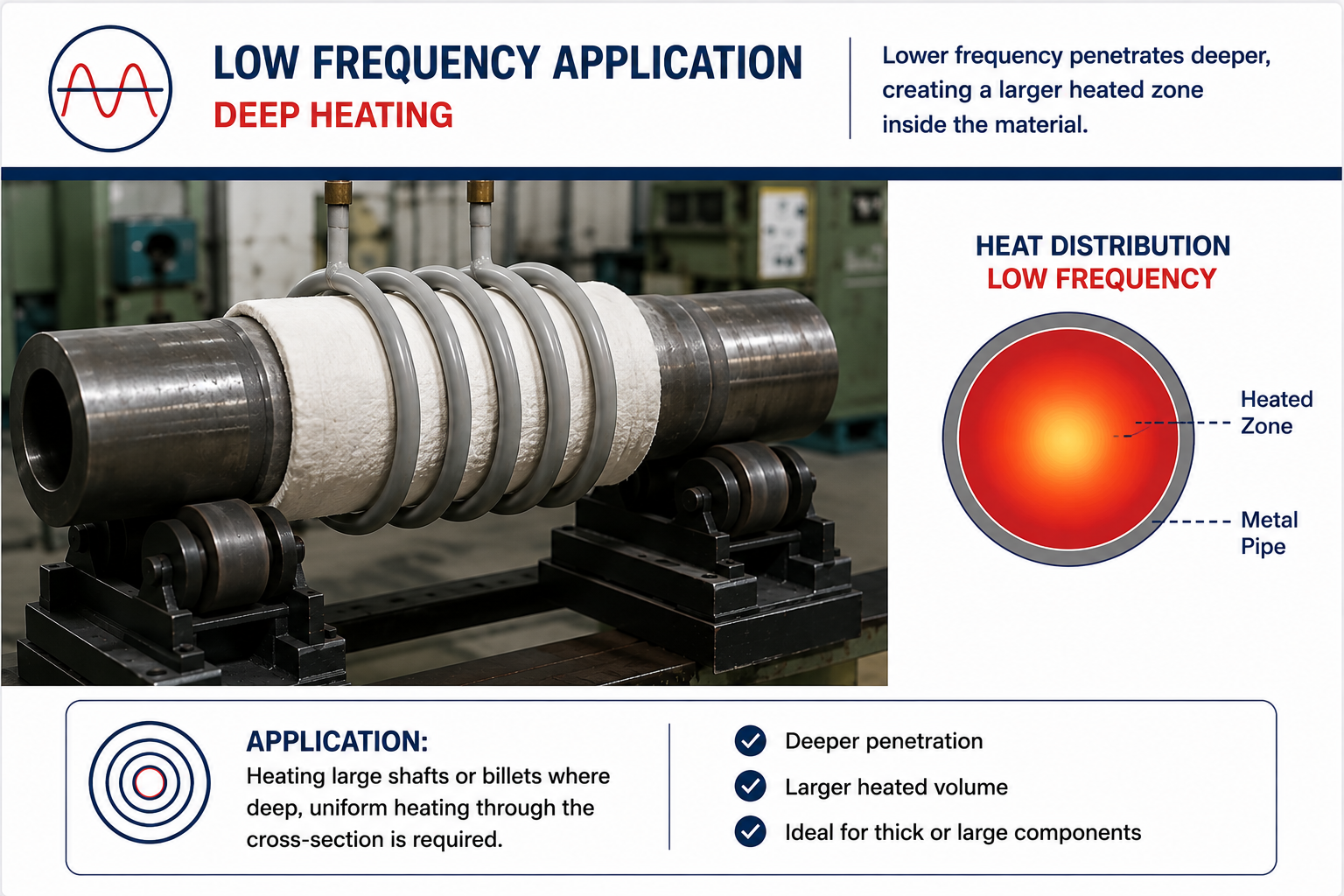
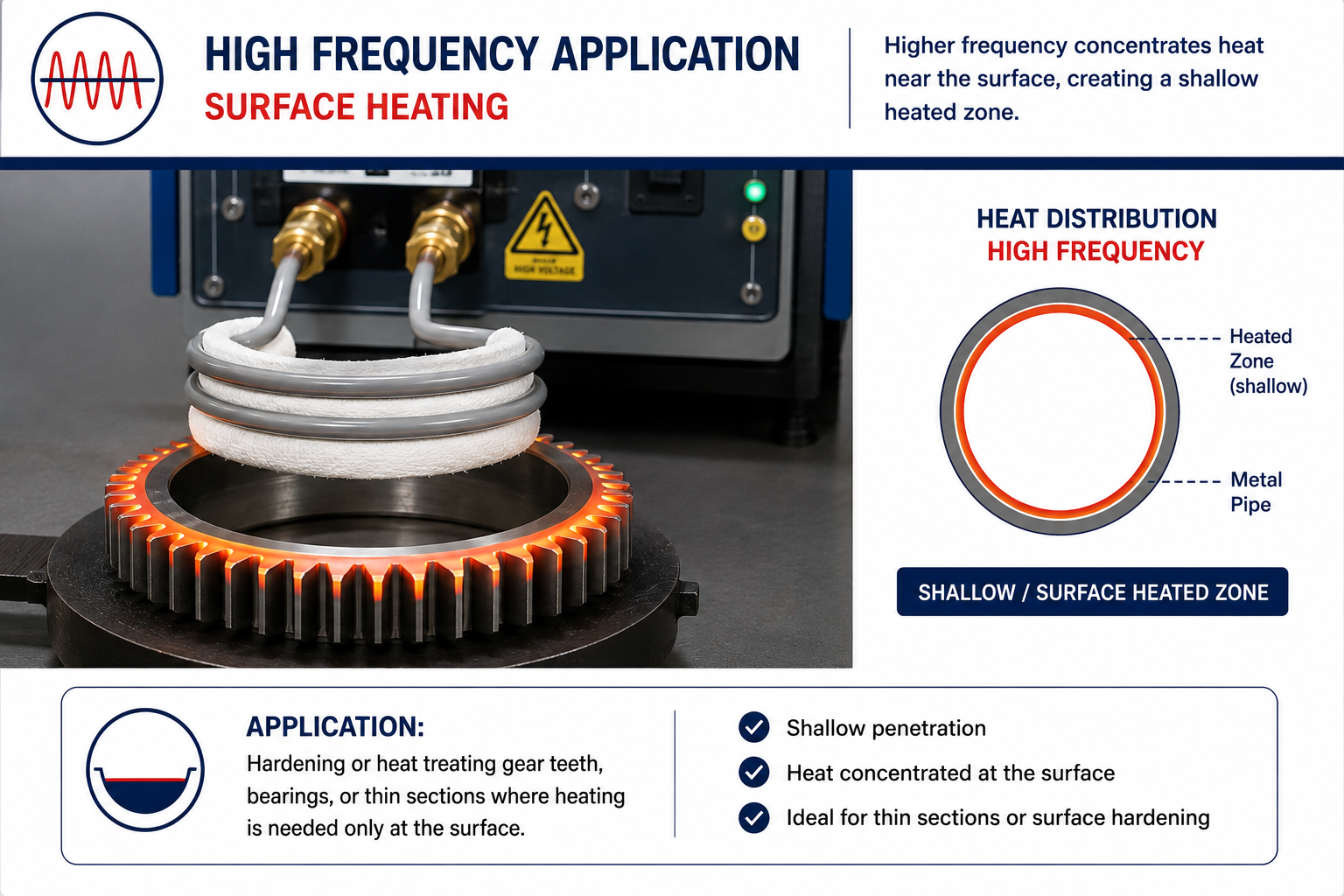
The frequency of the alternating current influences how energy is distributed within the workpiece. In general, higher frequencies concentrate heating closer to the surface, while lower frequencies allow deeper heating. The appropriate frequency depends on the material, part geometry and desired heating pattern.
Show a deeper/larger heated zone.
Show heat concentrated closer to the surface.
The induction coil controls where electromagnetic energy is delivered to the workpiece. Coil geometry, frequency, power and the distance between the coil and workpiece all influence the resulting heating pattern.
A changing magnetic field induces electrical current in a nearby conductive material. In induction heating, these induced currents flow within the workpiece and generate heat.


Tell us what you’re heating, the material, part dimensions, target temperature and desired cycle time. Our induction specialists can help determine the right approach.